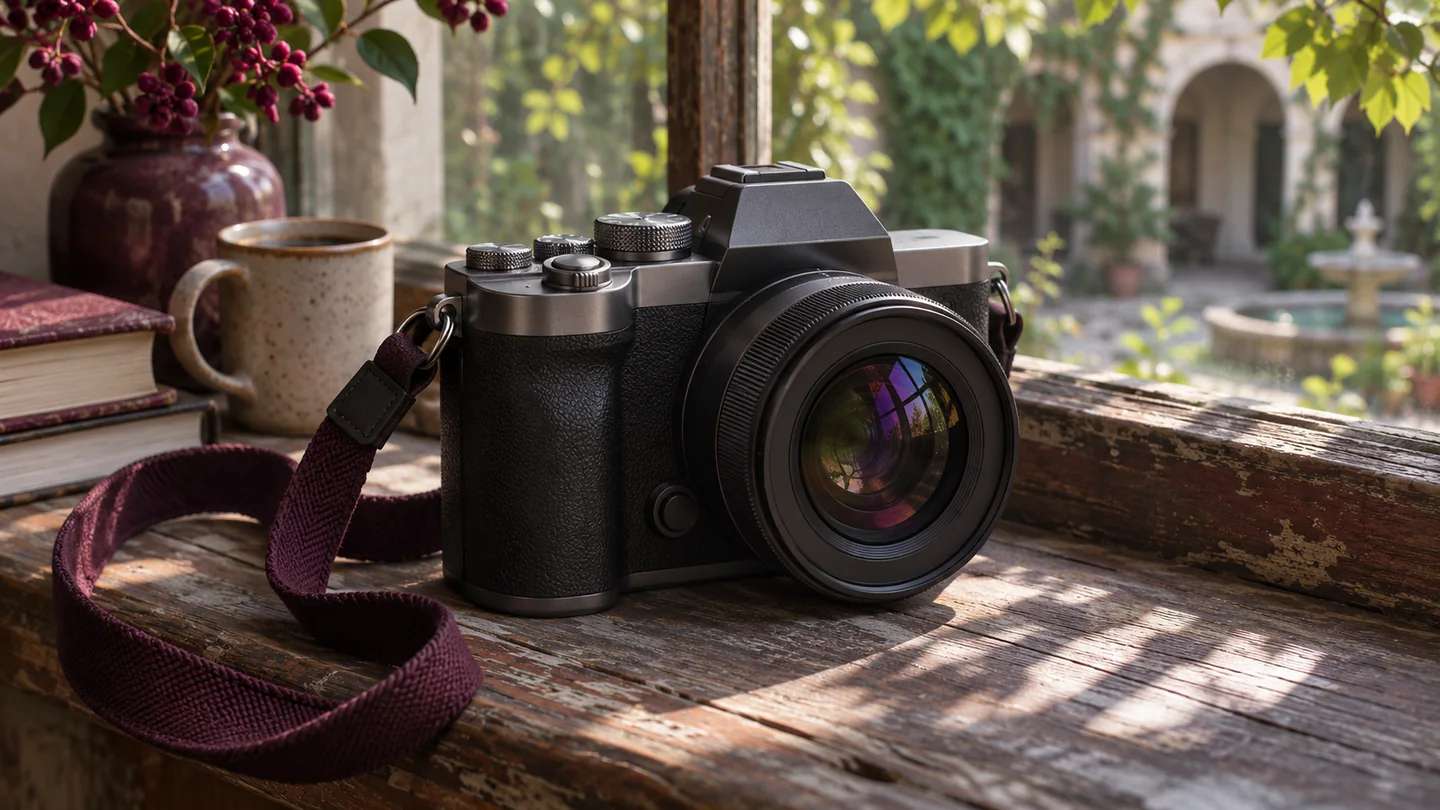
Framing is partly about what you notice—and partly about what you decide to leave outside.
pmaPMA Journal · 2 min read
ADVERTISEMENT
AI-generated editorial image · PMA Journal
THE SHORT VERSION
Choose the subject first, then make every edge of the frame serve it.
Say what caught your attention
Before taking a picture, describe the thing you noticed in a few words. It might be a shadow crossing a doorway or the space between two people. This small pause can help you choose a position and a frame. You do not need formal vocabulary. A photograph becomes easier to shape when you know which part of the scene you hope someone else will notice.
ADVERTISEMENT
Look at the edges
The center of a scene tends to hold your attention, while a bright sign or an awkwardly cut object enters unnoticed at the side. Check each edge before pressing the shutter. Move a step, change the height, or wait for a distraction to pass. These choices can make a picture clearer without requiring different equipment or a long editing session afterward.
Let the light suggest a choice
Notice where the light comes from and how it changes the surfaces in front of you. You might move into shade, wait for a cloud, or choose a different angle. There is no single kind of light that suits every subject. Try a few positions and compare the results. The comparison teaches you more about the scene than repeatedly taking the same photograph from the same place.
Select with the same care
When you review the pictures, return to your original intention. Which frame best carries the detail that caught you? A technically tidy image may still be less interesting than a slightly imperfect one with a clear subject. Keep permission to delete or set aside the rest. When photographing people or private places, respect consent and context. Making a picture does not automatically settle whether it should be shared.